
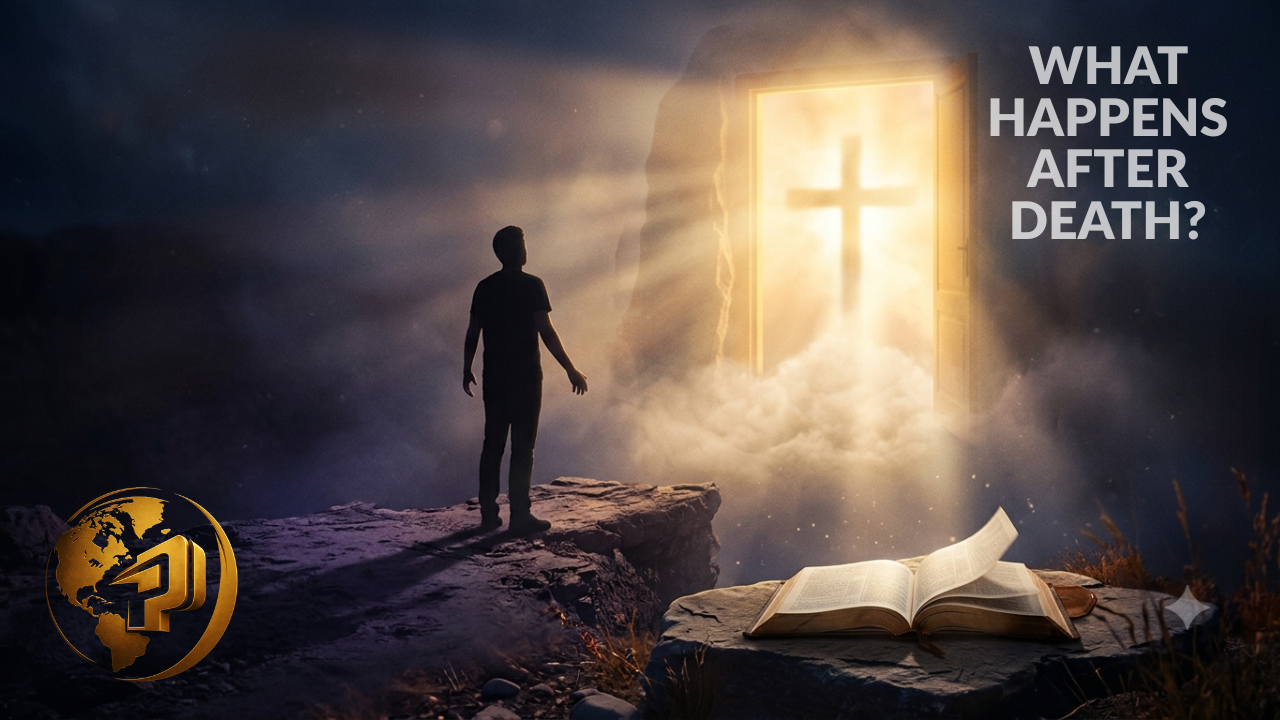
What Happens After Death? A Biblical Explanation of the Soul, Heaven, Hell, and Eternity
Death is one of the greatest mysteries of human existence. No matter a person’s wealth, position, education, or influence, everyone must eventually face it.
This reality raises serious questions:
What happens immediately after a person dies? Does the soul continue to exist? Do believers go directly to heaven? Where do unbelievers go? Are the dead conscious? Will we recognize our loved ones again? Is there another opportunity to repent after death?
ALSO, READ Is Using Artificial Intelligence a Sin? A Biblical Answer
People have offered many answers through religion, philosophy, tradition, and personal experience. However, for Christians, the final authority is not speculation, culture, dreams, or near-death testimonies. Our foundation is the Word of God.
The Bible does not answer every question people may have about the afterlife, but it reveals enough for us to understand that death is not the end of human existence.
Scripture declares:
“And as it is appointed unto men once to die, but after this the judgment.”
— Hebrews 9:27
According to the Bible, physical death is followed by continued existence, resurrection, judgment and an eternal destination.
For those who belong to Jesus Christ, death is not the destruction of hope. It is a passage into the presence of the Lord while awaiting the resurrection of the body and the fullness of eternal life.
For those who reject God’s salvation, death does not remove accountability. It brings a person closer to final judgment.
The most important question is therefore not merely, “What happens after death?”
It is:
Where will you spend eternity after you die?
What Is Death According to the Bible?
The Bible presents death as separation rather than complete annihilation.
Human beings were created with both a physical and spiritual dimension. The body is visible and earthly, while the spirit is the immaterial part of the person.
James writes:
“For as the body without the spirit is dead, so faith without works is dead also.”
— James 2:26
Physical death takes place when the spirit separates from the body. The physical body stops functioning and begins returning to the earth.
God told Adam:
“For dust thou art, and unto dust shalt thou return.”
— Genesis 3:19
The body returns to dust, but the person does not cease to exist.
The Bible speaks about death in three important ways.
Physical Death
Physical death is the separation of the spirit from the body.
The heart stops beating, breathing ends and the body begins to decay. However, physical death does not end the person’s existence before God.
Spiritual Death
Spiritual death is separation from God because of sin.
A person may be physically alive while spiritually dead.
Paul wrote:
“And you hath he quickened, who were dead in trespasses and sins.”
— Ephesians 2:1
Before salvation, people are spiritually separated from God. Through faith in Jesus Christ, they receive spiritual life and reconciliation with God.
The Second Death
The second death is the final and eternal consequence of rejecting God.
Revelation states:
“And death and hell were cast into the lake of fire. This is the second death.”
— Revelation 20:14
Physical death affects everyone unless Christ returns during a person’s lifetime. The second death, however, refers to final separation from God after judgment.
Why Did Death Enter the World?
Death was not presented as part of humanity’s original blessing.
God created human beings to live in fellowship with Him. However, sin entered the world through Adam’s disobedience.
Paul explains:
“Wherefore, as by one man sin entered into the world, and death by sin; and so death passed upon all men.”
— Romans 5:12
Death is connected to the fall of humanity and the entrance of sin into the world.
This is why death feels unnatural, painful and deeply distressing. Human beings instinctively resist it because we were created with eternity in view.
Ecclesiastes says that God has placed eternity in the human heart.
Death is an enemy, but it is an enemy that Jesus Christ came to defeat.
“The last enemy that shall be destroyed is death.”
— 1 Corinthians 15:26
Through His death and resurrection, Jesus broke the power of death and opened the way to eternal life.
What Happens Immediately After a Person Dies?
At physical death, the spirit leaves the body.
The body remains on earth, but the person enters what theologians often call the intermediate state.
The intermediate state is the period between physical death and bodily resurrection.
During this time:
- The body remains in the grave or returns to the earth.
- The soul or spirit continues to exist.
- Believers are with Christ.
- Unbelievers remain separated from God.
- Everyone awaits resurrection and final judgment.
Death does not immediately complete every stage of God’s plan. The resurrection of the body and final judgment are still future events.
What Happens to Christians After Death?
The Bible gives strong assurance that believers enter the presence of Christ after death.
Paul wrote:
“We are confident, I say, and willing rather to be absent from the body, and to be present with the Lord.”
— 2 Corinthians 5:8
To be absent from the body is to be present with the Lord.
Paul also said:
“For to me to live is Christ, and to die is gain.”
— Philippians 1:21
Death could only be described as a gain if it brought him into a closer experience of Christ’s presence.
He continued:
“Having a desire to depart, and to be with Christ; which is far better.”
— Philippians 1:23
Paul did not describe death as the end of consciousness. He expected to depart from this life and be with Christ.
Jesus also spoke to the repentant criminal who was crucified beside Him:
“Verily I say unto thee, To day shalt thou be with me in paradise.”
— Luke 23:43
The man had no opportunity to perform religious works, be baptised or rebuild his life. He placed his faith in Christ, and Jesus promised that he would be with Him in paradise.
Therefore, when a genuine believer dies, the believer enters the presence of the Lord while awaiting the resurrection of the body.
Do Christians Go Directly to Heaven?
Yes, believers enter the presence of Christ after death.
However, it is important to understand that the Bible describes both a present heavenly state and a future eternal state.
After death, believers are with Christ. But they have not yet experienced the full completion of redemption.
They are still awaiting:
- The return of Jesus Christ
- The resurrection of the body
- The transformation of living believers
- The final judgment
- The new heaven and new earth
- The complete removal of death, sorrow, and pain
The final Christian hope is not merely to exist forever as a disembodied spirit.
The final hope is resurrection, glorification, and eternal life with God in a renewed creation.
What Happens to Unbelievers After Death?
The Bible teaches that those who die without salvation remain separated from God and await final judgement.
Jesus described the rich man and Lazarus in Luke 16:19–31.
Lazarus died and was carried to a place of comfort. The rich man also died and found himself in torment.
The rich man was conscious. He remembered his life, recognized his condition, and was concerned about his brothers who were still alive.
A great gulf separated the place of comfort from the place of torment, and no one could cross from one side to the other.
This passage shows that death does not erase consciousness, identity or accountability.
The rich man’s condition in Luke 16 should also be distinguished from the final lake of fire described in Revelation 20.
He was awaiting the final resurrection and judgment.
Is Hell the Same as the Lake of Fire?
The English word “hell” is sometimes used to translate different biblical terms, which can create confusion.
One important distinction is between Hades and the lake of fire.
Hades is often understood as the temporary realm of the dead before final judgment.
The lake of fire is the final destination of Satan, fallen angels and all whose names are not found in the Book of Life.
Revelation says:
“And death and hell were cast into the lake of fire.”
— Revelation 20:14
This shows that Hades itself is cast into the lake of fire. Therefore, they are not exactly the same.
The lake of fire represents the final and irreversible judgement called the second death.
Are People Conscious After Death?
Several biblical passages suggest conscious existence after death.
Moses and Elijah appeared and spoke with Jesus during the Transfiguration.
The rich man and Lazarus were conscious in Luke 16.
The martyrs in Revelation 6 were aware of God and asked how long it would be before justice was carried out.
Paul expected to depart and be with Christ.
Jesus promised the repentant thief that he would be with Him in paradise that day.
These passages strongly support the belief that people continue to exist consciously after physical death.
What Does the Bible Mean When It Calls Death “Sleep”?
The Bible sometimes uses sleep as a picture of death.
Jesus said concerning Lazarus:
“Our friend Lazarus sleepeth; but I go, that I may awake him out of sleep.”
— John 11:11
The disciples thought Jesus meant natural sleep. Jesus then spoke plainly and told them that Lazarus was dead.
Paul also described deceased believers as those who had fallen asleep.
This language does not necessarily mean that the soul is unconscious.
Sleep is a fitting picture of death because:
- The body appears to be sleeping.
- Death is temporary from God’s perspective.
- The body will awaken at the resurrection.
- Believers rest from earthly labour and suffering.
Some Christian groups believe the soul remains unconscious until the resurrection. This position is often called soul sleep.
However, passages such as Luke 23:43, Philippians 1:23, 2 Corinthians 5:8 and Revelation 6:9–11 support conscious existence after death.
What Happens to the Physical Body?
When a person dies, the physical body begins to decay.
The body may be buried, cremated, lost at sea or destroyed in another way. However, none of this prevents God from raising the dead.
God created humanity from the dust of the earth. He is fully capable of restoring and transforming the body regardless of how death occurred.
Jesus said:
“The hour is coming, in the which all that are in the graves shall hear his voice, and shall come forth.”
— John 5:28–29
The grave is not the body’s final destination.
What Is the Resurrection of the Dead?
The resurrection is the future act of God in which the dead will be raised bodily.
Christian hope is not merely the survival of the soul. It is the resurrection of the whole person.
Paul devoted an entire chapter to this truth in 1 Corinthians 15.
He wrote:
“It is sown in corruption; it is raised in incorruption.”
— 1 Corinthians 15:42
The body placed in the grave is mortal, weak, and subject to decay. The resurrected body of the believer will be glorious, powerful, and immortal.
Paul compares the body to a seed. A seed is placed into the ground and later rises in a transformed condition.
The resurrected body will maintain personal identity, but it will no longer be controlled by corruption, sickness or death.
What Will the Believer’s Resurrected Body Be Like?
The resurrection body of the believer will be transformed to resemble Christ’s glorified body.
Paul wrote:
“Who shall change our vile body, that it may be fashioned like unto his glorious body.”
— Philippians 3:21
The believer’s resurrected body will be the following:
- Incorruptible
- Immortal
- Glorious
- Powerful
- Free from disease
- Free from weakness
- Free from ageing
- Free from death
This does not mean believers will become spirits without bodies.
Jesus rose bodily from the dead. His disciples could see Him, touch Him, and speak with Him.
The final Christian hope includes a real, transformed, and glorified body.
Will Everyone Be Resurrected?
Yes. The Bible teaches the resurrection of both the righteous and the unrighteous.
Daniel wrote:
“And many of them that sleep in the dust of the earth shall awake, some to everlasting life, and some to shame and everlasting contempt.”
— Daniel 12:2
Jesus also said:
“They that have done good, unto the resurrection of life; and they that have done evil, unto the resurrection of damnation.”
— John 5:29
Paul declared:
“There shall be a resurrection of the dead, both of the just and unjust.”
— Acts 24:15
Resurrection is therefore not the same as salvation.
Everyone will be raised, but not everyone will experience eternal life with God.
What Happens When Jesus Returns?
At the return of Christ, believers who have died will be raised.
Paul writes:
“For the Lord himself shall descend from heaven with a shout, with the voice of the archangel, and with the trump of God: and the dead in Christ shall rise first.”
— 1 Thessalonians 4:16
Living believers will also be transformed.
“We shall not all sleep, but we shall all be changed.”
— 1 Corinthians 15:51
The return of Christ will reveal the full victory of Jesus over sin and death.
Those who belong to Christ will receive glorified bodies and be with the Lord forever.
What Is the Judgement Seat of Christ?
The Bible teaches that believers will appear before the judgment seat of Christ.
Paul says:
“For we must all appear before the judgment seat of Christ.”
— 2 Corinthians 5:10
This judgement is not about earning salvation.
Salvation is received by grace through faith in Jesus Christ.
“For by grace are ye saved through faith; and that not of yourselves: it is the gift of God.”
— Ephesians 2:8
The judgment seat of Christ concerns the believer’s works, motives, faithfulness, and stewardship.
Christians will give an account of how they used their:
- Time
- Gifts
- Opportunities
- Resources
- Influence
- Knowledge
- Ministry
- Relationships
Some works will receive rewards, while others will be shown to have little eternal value.
This truth should not cause believers to live in terror, but it should encourage faithful and responsible living.
What Is the Great White Throne Judgement?
Revelation 20 describes a final judgement before a great white throne.
John writes:
“And I saw the dead, small and great, stand before God; and the books were opened.”
— Revelation 20:12
People are judged according to their works.
Another book is opened, called the Book of Life.
Those whose names are not found in the Book of Life are cast into the lake of fire.
This is the final judgment of the wicked.
Earthly status will provide no protection. The small and great will stand before God.
No wealth, popularity, political power, or religious title will excuse sin.
What Is Heaven Like?
Heaven is the dwelling place of God and the present home of believers who have died in Christ.
However, the Bible’s final picture is not simply of people leaving earth and living forever in the present heaven.
God promises a new heaven and a new earth.
John writes:
“And I saw a new heaven and a new earth.”
— Revelation 21:1
God will dwell with His people.
In the eternal state:
- There will be no more death.
- There will be no more mourning.
- There will be no more crying.
- There will be no more pain.
- There will be no curse.
- God’s servants will worship and serve Him.
- God’s people will see His face.
- Righteousness will fill creation.
Revelation declares:
“And God shall wipe away all tears from their eyes; and there shall be no more death.”
— Revelation 21:4
Heaven should not be reduced to the picture of people floating on clouds and playing harps forever.
The biblical vision is richer.
It includes worship, fellowship, service, joy, beauty, restored creation and unbroken communion with God.
Will We Recognize Our Loved Ones in Heaven?
The Bible strongly suggests that personal identity continues after death.
Moses and Elijah were recognizable during the Transfiguration.
The rich man recognised Lazarus.
Jesus’ disciples recognized Him after His resurrection.
Paul expected to rejoice in the presence of believers at Christ’s coming.
These passages suggest that believers will know one another.
Heaven does not erase personality or identity. It removes sin, pain, selfishness, jealousy, and brokenness.
Relationships will be purified and transformed.
However, our greatest joy in eternity will not merely be reunion with loved ones. It will be the presence of God Himself.
Will Marriage Continue in Heaven?
Jesus taught that earthly marriage will not continue in the same form after the resurrection.
He said:
“For in the resurrection they neither marry, nor are given in marriage.”
— Matthew 22:30
This does not mean people will lose all recognition or affection.
It means the institution of marriage belongs to this present earthly life and serves purposes that will no longer be required in the resurrection.
Believers will enjoy perfect fellowship as members of God’s redeemed family.
Do People Become Angels When They Die?
No.
The Bible never teaches that human beings become angels after death.
Angels and humans are different kinds of created beings.
Believers will be glorified and made like Christ, but they will remain redeemed human beings.
The statement that someone “gained their wings” may be intended as comfort, but it is not a biblical description of what happens after death.
Can the Dead See What Is Happening on Earth?
The Bible does not clearly teach that deceased people constantly watch everything happening on earth.
Hebrews 12:1 speaks of a “great cloud of witnesses”, but this may refer to the testimony of faithful believers discussed in Hebrews 11 rather than a heavenly audience watching earthly events.
Revelation 6 indicates that martyrs in heaven possess some awareness of God’s unfolding justice.
However, Scripture does not provide enough information to conclude that dead relatives continuously observe everything their families do.
Christians should avoid making confident claims where the Bible gives limited information.
Can Dead Relatives Visit Us?
The Bible does not encourage believers to seek contact with the dead.
People may dream about deceased loved ones because of grief, memory, longing, or emotional processing.
A dream about a dead relative does not automatically mean that the person visited from the afterlife.
Christians should test spiritual experiences carefully and refuse every attempt to summon or consult the dead.
Can the Dead Communicate With the Living?
God strictly warned Israel against necromancy, mediums, and attempts to consult the dead.
“There shall not be found among you… a consulter with familiar spirits, or a wizard, or a necromancer.”
— Deuteronomy 18:10–11
King Saul consulted a medium at Endor, but his action was sinful and contributed to his judgment.
Christians should not participate in séances, rituals, spiritual consultations, or practices designed to communicate with departed spirits.
Believers should seek direction from God through Scripture, prayer, wisdom, and the Holy Spirit.
What Happens to Babies and Young Children Who Die?
The death of a child is one of the most painful experiences a family can endure.
The Bible does not provide a long, detailed explanation of the eternal condition of every infant who dies.
However, Christians can trust the character of God.
God is perfectly just, merciful, compassionate and righteous. He never acts unfairly.
After the death of David’s infant son, David said:
“I shall go to him, but he shall not return to me.”
— 2 Samuel 12:23
Many Christians understand this statement as a reason to hope that children who die are received by God.
While believers should avoid speaking beyond what Scripture clearly reveals, grieving parents can entrust their children to the perfect mercy and justice of God.
What Happens to People Who Never Heard the Gospel?
This is one of the most difficult questions concerning salvation and judgement.
The Bible teaches several truths that must be held together:
- God is perfectly just.
- God never judges wrongly.
- Creation reveals His power and divine nature.
- Human beings are accountable for sin.
- Jesus Christ is the only Saviour.
- The gospel must be preached to all nations.
Jesus said:
“I am the way, the truth, and the life: no man cometh unto the Father, but by me.”
— John 14:6
Paul wrote:
“How shall they believe in him of whom they have not heard? and how shall they hear without a preacher?”
— Romans 10:14
The reality that many people have not heard the gospel should not produce indifference. It should create urgency in evangelism and missions.
Christians can trust that the Judge of all the earth will do what is right.
Is Reincarnation Biblical?
No.
The Bible does not teach that people repeatedly return to earth in different bodies.
Hebrews states:
“It is appointed unto men once to die, but after this the judgment.”
— Hebrews 9:27
Reincarnation and resurrection are not the same.
Reincarnation teaches a cycle of repeated earthly lives.
Resurrection teaches that God will raise the same individual person in a transformed body.
Christianity teaches one earthly life, death, resurrection and judgment.
Is Purgatory Mentioned in the Bible?
The Roman Catholic tradition teaches purgatory as a state of purification for certain people after death.
Many Protestant Christians reject this teaching because they do not believe it is clearly established in Scripture.
The New Testament teaches that Christ’s sacrifice is sufficient to cleanse believers from sin.
“The blood of Jesus Christ his Son cleanseth us from all sin.”
— 1 John 1:7
Jesus told the repentant thief that he would be with Him in paradise that day, without describing an additional place of purification.
Christians from different traditions interpret certain passages differently, but no teaching should reduce confidence in the sufficiency of Christ’s finished work.
Are Near-Death Experiences Proof of Heaven?
Near-death experiences are reports from people who came close to death or were temporarily declared clinically dead.
Some report seeing light, deceased relatives, spiritual beings or unfamiliar places.
These experiences may be emotionally powerful, but they should not become the foundation of Christian doctrine.
Different people report contradictory experiences. Culture, medication, trauma, memory and medical conditions may influence what a person recalls.
A testimony must never carry more authority than Scripture.
If someone claims to have visited heaven or received a new revelation, the message must be tested carefully against the Bible.
God’s written Word remains the standard of truth.
Can Someone Repent After Death?
The Bible does not present death as another opportunity for salvation.
Hebrews 9:27 connects death with judgment.
In Luke 16, the rich man could not cross from his place of torment to the place of comfort.
The condition after death was fixed.
Scripture repeatedly calls people to respond to God now.
“Behold, now is the accepted time; behold, now is the day of salvation.”
— 2 Corinthians 6:2
No one should postpone repentance with the assumption that another opportunity will come after death.
Why Do Christians Still Die?
Jesus has defeated death, but believers still experience physical death because the final redemption of the body has not yet occurred.
Christ’s victory means that death no longer has the final word over those who belong to Him.
Paul wrote:
“O death, where is thy sting? O grave, where is thy victory?”
— 1 Corinthians 15:55
A Christian may still experience pain, illness and physical death. However, death cannot separate the believer from Christ.
For the Christian, the grave is temporary.
The resurrection is certain.
Should Christians Fear Death?
Death can naturally produce fear because it involves leaving the familiar and entering what we have not yet physically seen.
Christians may experience anxiety about the process of dying, the pain involved or the effect on loved ones.
However, believers do not need to live as slaves to the fear of death.
Jesus came to deliver those who were held in bondage by that fear.
“And deliver them who through fear of death were all their lifetime subject to bondage.”
— Hebrews 2:15
The believer’s confidence does not rest in personal perfection.
It rests in Jesus Christ, who died and rose again.
David declared:
“Yea, though I walk through the valley of the shadow of death, I will fear no evil: for thou art with me.”
— Psalm 23:4
The presence of God does not end when earthly life ends.
How Should Christians Grieve?
Christians are not forbidden from grieving.
Jesus wept at the tomb of Lazarus, even though He knew Lazarus would rise.
Grief is a natural response to loss.
However, believers grieve with hope.
Paul wrote:
“That ye sorrow not, even as others which have no hope.”
— 1 Thessalonians 4:13
Christian hope does not remove the pain of separation, but it assures believers that death is not permanent for those who are in Christ.
How Can You Prepare for Death?
Many people prepare financially for death by writing wills, buying insurance, and organising their possessions.
These steps may be wise, but they are not enough.
The greatest preparation for death is reconciliation with God.
Every person has sinned.
“For all have sinned, and come short of the glory of God.”
— Romans 3:23
Sin separates people from God, and no amount of good works can erase guilt.
God sent His Son, Jesus Christ, to die for sinners.
Jesus carried the punishment humanity deserved and rose from the dead.
Salvation is offered freely to everyone who repents and believes.
To prepare for eternity:
- Admit that you are a sinner.
- Believe that Jesus Christ died for your sins.
- Believe that God raised Him from the dead.
- Repent and turn away from sin.
- Place your trust in Christ alone.
- Confess Jesus as Lord.
- Begin following Him in obedience.
Scripture promises:
“Believe on the Lord Jesus Christ, and thou shalt be saved.”
— Acts 16:31
Frequently Asked Questions
What happens in the first moments after death?
The spirit separates from the body. The body remains on earth, while the person enters the intermediate state. Believers enter the presence of Christ, while unbelievers remain separated from God and await judgment.
Does the soul leave the body immediately?
James 2:26 describes the body without the spirit as dead. This indicates that physical death involves the spirit’s departure from the body.
Do all good people go to heaven?
Salvation is not earned by appearing morally good. Everyone has sinned and needs God’s grace. Eternal life is received through faith in Jesus Christ.
Are dead people unconscious?
Some Christians believe in soul sleep. However, several biblical passages support conscious existence after death, including Luke 16, Luke 23:43, Philippians 1:23 and Revelation 6:9–11.
Can dead relatives visit us in dreams?
Dreams about deceased relatives may result from grief, memory or emotional processing. Christians should not automatically interpret them as supernatural visits.
Will we remember our earthly lives in heaven?
The Bible suggests continuity of personal identity. However, painful memories will no longer produce the sorrow and suffering associated with this present world.
Will we recognize one another in heaven?
Biblical examples strongly suggest continued recognition and identity after death and resurrection.
Do people become angels after death?
No. Human beings and angels are distinct creations. Believers will become glorified human beings, not angels.
What happens to people who are cremated?
Cremation does not prevent resurrection. God can raise a person regardless of what happened to the physical body after death.
Is cremation a sin?
The Bible does not directly command burial or explicitly forbid cremation. Christians may choose burial or cremation according to conscience, culture, family considerations and faith.
Can someone be saved after death?
Scripture does not teach that people receive another opportunity to repent after death. The call to salvation must be answered during this earthly life.
Is heaven our final destination?
Believers enter God’s presence after death, but the final biblical hope includes bodily resurrection and life with God in the new heaven and new earth.
What is the second death?
The second death is final separation from God in the lake of fire after judgment.
Will there be pain in heaven?
No. God promises to remove death, mourning, crying and pain from the eternal state.
What must I do to receive eternal life?
Repent of sin and trust in Jesus Christ as Lord and Saviour. Salvation is received through faith in His death and resurrection.
Conclusion
Death is not the end.
According to the Bible, physical death separates the spirit from the body, but human existence continues.
Believers enter the presence of Christ while awaiting bodily resurrection.
Unbelievers remain separated from God while awaiting final judgment.
A day is coming when Jesus Christ will return, the dead will be raised and every person will stand before God.
Those who belong to Christ will receive glorified bodies and enjoy eternal life with God in the new heaven and new earth.
Those who reject God’s salvation will face the second death and eternal separation from Him.
These truths are serious, but the gospel offers hope.
Jesus said:
“I am the resurrection, and the life: he that believeth in me, though he were dead, yet shall he live.”
— John 11:25
The greatest preparation for death is not wealth, fame, religion or moral achievement.
It is knowing Jesus Christ.
You do not have to face eternity without hope.
Through Christ, your sins can be forgiven, your relationship with God can be restored and death can become the doorway into eternal life.
Prayer of Salvation
Heavenly Father, I acknowledge that I am a sinner and that I cannot save myself.
I believe that Jesus Christ is Your Son. I believe He died on the cross for my sins and rose from the dead.
Lord Jesus, forgive me, cleanse me and become the Lord of my life.
I turn away from sin and place my trust in You alone.
Write my name in the Book of Life. Give me the strength to follow You faithfully and prepare me to spend eternity in Your presence.
Thank You for saving me and giving me the gift of eternal life.
In Jesus’ name, Amen.